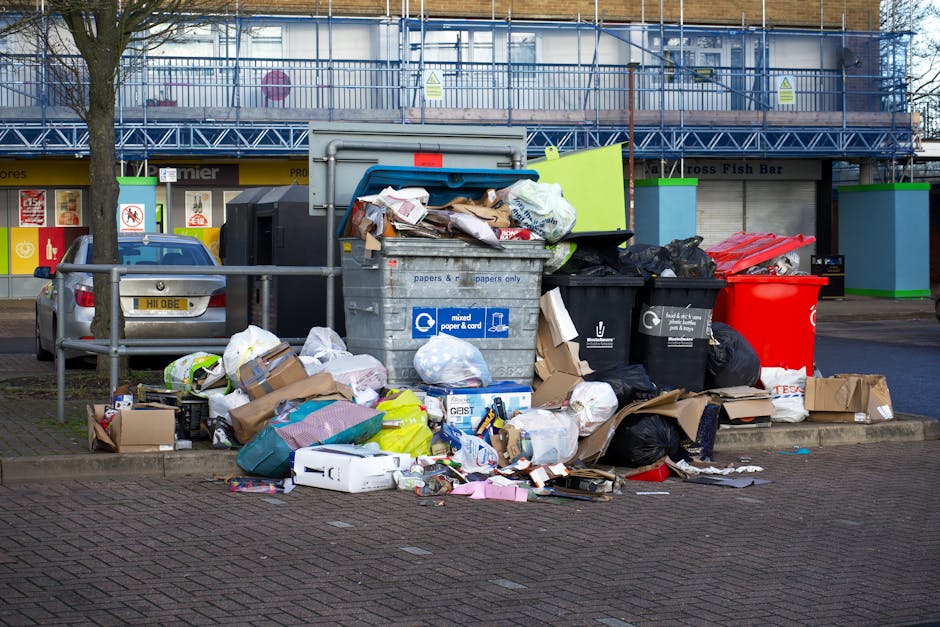
Compare Rubbish Removal vs Hackney Council Collections in N16

If you live or work in N16, the choice between private rubbish removal and Hackney Council collections can feel more confusing than it should. One option sounds simple and low-cost. The other looks faster, more flexible, and far less hands-on. But what actually works best for your situation?
This guide to Compare Rubbish Removal vs Hackney Council Collections in N16 breaks it all down in plain English. We'll look at how each service works, where the real differences lie, and which option makes sense for different kinds of waste, properties, and timelines. If you are clearing a flat, dealing with furniture, or just staring at a growing pile of stuff in the hallway on a rainy Tuesday morning, you're in the right place.
Truth be told, the "best" choice is usually the one that fits your waste type, access, urgency, and budget. That's where the detail matters.
Why Compare Rubbish Removal vs Hackney Council Collections in N16 Matters
N16 covers busy residential streets, flats with awkward access, house shares, gardens tucked behind narrow paths, and a fair number of properties where waste simply does not fit neatly into a standard routine. That context matters. A bulky sofa on a top floor, a broken wardrobe in pieces, or a garden clearance after a long weekend all create different problems.
Hackney Council collections are usually designed to serve the widest possible number of residents in a fair and structured way. Private rubbish removal, by contrast, is built around speed, convenience, and flexibility. Neither is automatically better. They just solve the problem differently.
Why does that matter so much? Because waste tends to create pressure. It blocks corridors, attracts complaints from neighbours, and starts to feel urgent very quickly. You also want to avoid overpaying or booking the wrong service for the wrong item. A simple comparison can save time, stress, and that awkward moment when you realise the collection day is still a week away and the cupboard has to go now.
If you are handling a larger clearance, you may also want to look at broader support such as house clearance or home clearance, especially when the job involves more than one room and a mix of furniture, bagged waste, and general clutter.
Expert summary: In N16, the best option is often the one that matches your access, urgency, and waste type. Council collections work well for straightforward items and planned jobs. Private rubbish removal tends to win on speed, convenience, and tricky clearances.
How Compare Rubbish Removal vs Hackney Council Collections in N16 Works
The comparison becomes much easier once you understand how each service usually operates.
Hackney Council collections
Council collections are generally intended for residents who need the local authority to remove bulky or household waste under specific rules. The process is usually more structured. You request a collection, wait for an available slot, and place items out in the right way before the collection takes place.
That structure is useful. It keeps things predictable and can be a straightforward solution for a small number of items. But it can also mean less flexibility. If your waste is mixed, your access is awkward, or you need the job done quickly, the process can feel slower than expected.
Private rubbish removal
Private rubbish removal is usually arranged around your schedule rather than a council rota. A team can often arrive, assess the load, remove the waste from inside or outside the property, and take it away in one visit. That makes it especially practical for busy households, landlords, offices, or anyone dealing with a same-week deadline.
It is also handy when the job is not just "rubbish" in the everyday sense. Think furniture, mixed household junk, bagged waste, garden debris, garage clutter, or leftover materials after a refurb. For those situations, services like furniture disposal and furniture clearance can be a better fit than waiting around for a standard collection route.
What changes in practice
In real terms, the differences show up in four places:
- Speed: private removal is usually faster to arrange.
- Convenience: private crews often handle the lifting and loading.
- Cost structure: council collections may seem cheaper, but the scope is narrower.
- Flexibility: private services often cope better with mixed or awkward waste.
If you are trying to compare both options fairly, ask yourself: do I want the lowest simple service cost, or the least disruption? That one question clears up a lot.
Key Benefits and Practical Advantages
Each option has strengths. The right choice depends on what you value most.
Benefits of Hackney Council collections
- Often suitable for residents who only need occasional bulky item removal.
- Can be a sensible choice for straightforward household waste.
- Useful when you are planning ahead and the items are easy to present at the kerbside or agreed collection point.
- May suit people who are comfortable working within fixed rules and timings.
Benefits of private rubbish removal
- More flexible booking, including tighter deadlines.
- Less lifting for you, which matters a lot if the waste is heavy or upstairs.
- Better for mixed loads where items are not all the same.
- Often better for flats, HMOs, and properties with tricky access.
- Can support larger clearances without multiple bookings.
Let's face it, not everyone has the time or strength to drag a broken wardrobe through a narrow staircase and then wait for the right collection day. If that sounds familiar, a private team starts to look a lot more attractive.
For business premises, the difference can be even sharper. If waste is affecting operations, then office clearance or business waste removal can be far more efficient than trying to fit commercial waste into a residential-style collection process.
Who This Is For and When It Makes Sense
This comparison is useful for a wide range of people in N16, and not just homeowners. In our experience, the decision usually comes down to the shape of the job more than anything else.
Private rubbish removal makes sense if you are:
- moving out and need a quick clear-up before handover;
- clearing a flat after tenants leave;
- dealing with bulky furniture or mixed junk;
- working to a deadline, such as a sale, inspection, or delivery;
- managing waste from a refurbishment or decorating job;
- unable to move items to the curb yourself.
Hackney Council collections make sense if you are:
- clearing one or two items only;
- not in a rush;
- happy to follow the council's collection rules carefully;
- dealing with a very straightforward household disposal task;
- trying to keep costs down for a small, predictable job.
A small example: a resident in a N16 terraced house might only need one old mattress removed. A council collection could be perfectly reasonable. But if that same resident also has two wardrobes, broken shelving, bags of loft clutter, and a battered desk, a private collection becomes the more practical answer. Simple as that.
If the clutter is spread across several rooms, you may also find loft clearance, garage clearance, or flat clearance useful depending on where the waste has built up.
Step-by-Step Guidance
If you want to make the right choice without second-guessing yourself, use this practical sequence.
- Identify the waste type. Separate bulky household items, bagged rubbish, green waste, and any materials from DIY or building work.
- Check the volume. One item is very different from half a room. Be honest here. People often underestimate how much there is until it's all on the pavement.
- Think about access. Narrow stairs, parking restrictions, shared entrances, and top-floor flats can all change the best option.
- Decide how fast it needs to go. If the waste is in the way today, waiting for a later slot may be a poor fit.
- Compare the effort involved. If you have to move items yourself, factor that in. Your back will thank you.
- Review the final cost in context. Cheaper on paper is not always cheaper once you include time, transport, lifting, and possible missed collections.
- Book the service that fits the actual job. Not the theoretical one. The real one.
One practical tip: if you are not sure whether your clearance is "simple" or "mixed", assume it is mixed until you have sorted it properly. That tiny shift avoids a lot of disappointment later.
Expert Tips for Better Results
Here are the things that tend to make the biggest difference in real life.
1) Sort before you book
Take ten minutes to separate what can be reused, recycled, or disposed of. Even a rough sort helps. A clean, organised load is easier to assess and often easier to remove.
2) Measure awkward items
Oversized furniture can create access issues you do not spot until collection day. Measure the width of stairwells, lifts, and doorways if the item looks borderline. This is especially helpful in older N16 buildings where stairs can feel a bit, well, character-building.
3) Photograph the load
A few clear photos can help you get a more accurate quote and reduce surprises. Include the full pile, the access route, and any items you think might be tricky.
4) Don't leave it until the last minute
If you know a clearance is coming, sort it early. Waiting tends to turn a manageable job into a stressed one. There's always one box you forgot, isn't there?
5) Match the service to the property type
Flats, shared homes, offices, and garden properties each have different practical realities. A service that suits one may be clumsy for another. That is where home clearance and house clearance can be especially helpful because they are designed around broader domestic clear-outs rather than a single bulky item.
Common Mistakes to Avoid
Most bad experiences come from a handful of avoidable mistakes. The good news is that they are easy to sidestep once you know what to look for.
- Assuming all rubbish is treated the same. It isn't. Mixed waste, furniture, construction debris, and garden waste may all need different handling.
- Forgetting access restrictions. A van may need parking space, time, or a permit arrangement. Don't ignore that part.
- Leaving items unprepared. Council collections often need items placed correctly. Private teams may still need the waste grouped sensibly.
- Booking the wrong service for heavy lifting. If you cannot move the item yourself, that should influence the decision from the start.
- Only comparing headline price. The cheapest option can become the most inconvenient very quickly.
- Not checking what is included. Loading, lifting, labour, disposal, and recycling are not always packaged the same way.
There is also a quiet mistake people make all the time: they compare services as if both are trying to solve the same problem. They're not. One is a public collection service with rules and timing. The other is a flexible removal service. Different jobs, different strengths.
Tools, Resources and Recommendations
You do not need much to make a smart choice, but a few simple tools help.
- A tape measure: useful for bulky furniture and awkward hallway access.
- Your phone camera: take pictures of the waste and the route out.
- A rough checklist: note which items stay, which go, and which may need special handling.
- A calendar: so you can compare your deadline with the likely collection window.
If your clearance is part of a larger project, it helps to look at related services too. A garden overhaul may be easier if combined with garden clearance. A refurbishment may benefit from builders waste clearance. If you're replacing old seating or storage, a more focused furniture clearance may be the cleanest route.
For anyone comparing value rather than just price, the page on pricing and quotes is a useful place to understand how estimates are typically approached. And if sustainability matters to you - which, to be fair, it should - it is worth reading about recycling and sustainability so you know waste is being handled with care, not just tipped into the nearest van and forgotten.
Law, Compliance, Standards, or Best Practice
Waste disposal in the UK is not something to be casual about. You do not need to become a legal expert, but you should understand the basics. Household waste, business waste, and construction waste can be subject to different expectations, and anyone arranging removal should think carefully about safe, lawful handling.
Best practice usually means three things:
- Duty of care: waste should go to an appropriate, authorised destination.
- Proper segregation: recyclable, reusable, and general waste should be separated where practical.
- Safe handling: lifting, loading, and transport should be done without putting people or property at risk.
If you are disposing of waste from a business, the bar is higher in practical terms. Records, consistency, and responsible handling matter. That is why business waste removal is often a better-fit option than trying to use a service that was designed only for household items.
There is also a common-sense side to compliance. If an item is hazardous, heavy, or awkward, don't guess. Ask questions, describe it accurately, and choose a provider that handles the work properly. Better to be a bit cautious upfront than face a messy problem later. Nobody wants that on their week.
Options, Methods, or Comparison Table
Here's a straightforward comparison of the two approaches.
| Factor | Hackney Council Collections | Private Rubbish Removal |
|---|---|---|
| Speed | Usually slower and based on availability | Often faster and more flexible |
| Best for | Small, straightforward household items | Bulky, mixed, urgent, or awkward waste |
| Convenience | You usually prepare and present items yourself | Teams often handle lifting and loading |
| Property types | Works well for simple residential jobs | Better for flats, houses, offices, and harder access |
| Waste variety | Usually more limited | More adaptable to mixed loads |
| Cost feel | Can appear cheaper for very small jobs | May cost more but save time and effort |
| Planning needed | Higher - timing and placement matter | Lower - often easier to arrange quickly |
One fair way to think about it is this: the council route is often a tidy, rule-based solution for smaller jobs. Private removal is more like a hands-on service that adapts to the mess as it is, which is often the real world version anyway.
Case Study or Real-World Example
Imagine a flat in N16 after a long-overdue declutter. There is a two-seat sofa, a broken desk, three bags of general rubbish, a small bookcase, and some odds and ends from a cupboard under the stairs. The resident works full-time and has a narrow entrance hall, so moving everything outside is awkward.
If they try to handle this through a council collection, the job may be possible, but it could mean more preparation, more waiting, and more manual effort. If the items do not meet the collection format neatly, the whole thing becomes a bit of a faff.
Now compare that with a private removal team. They arrive, assess the pile, carry items from the flat, and remove everything in one visit. The resident does not need to lug a sofa down the stairs or coordinate multiple collection attempts. That is often the difference between a job hanging over you for days and a job disappearing by lunchtime.
For a different scenario, picture a landlord clearing a one-bedroom property between tenancies. Mixed contents, old furniture, and a few damaged pieces. In that case, a tailored flat clearance is often the most efficient option. Clean, fast, and far less disruptive for neighbours too.
Practical Checklist
Use this before you book anything.
- Have I listed every item that needs removing?
- Is the waste mainly bulky, mainly bagged, or a mixed load?
- Do I have a deadline tied to moving, tenancy, repairs, or a delivery?
- Can I safely move the items myself?
- Is access straightforward, or are there stairs, parking issues, or narrow corridors?
- Would waiting for a council slot cause problems?
- Do I need someone to load from inside the property?
- Am I comparing full service value, not just the headline price?
- Does the waste involve furniture, garden cuttings, office items, or building debris?
- Would a specialist service fit better than a general collection?
If you can answer those questions honestly, you'll usually know which direction to go. And if you still feel unsure, that's normal. Waste decisions are rarely exciting, but they do become easier once the job is looked at properly.
Get a free quote today and see how much you can save.
Conclusion
When you compare rubbish removal vs Hackney Council collections in N16, the right choice depends on more than cost alone. Think about the type of waste, your access, how quickly you need it gone, and how much effort you want to put in yourself. Council collections can be a sensible, low-friction option for small and straightforward jobs. Private rubbish removal is often the better choice when speed, flexibility, and full-service convenience matter most.
If the job is larger, messier, or tied to a deadline, a professional clearance route often saves time and stress in ways that are easy to underestimate at first. That peace of mind counts for a lot, especially when the pile is already starting to get on your nerves.
Whatever you choose, aim for the option that leaves your space calm, clear, and easy to live in again. That part matters more than people admit.
Frequently Asked Questions
Is private rubbish removal faster than Hackney Council collections in N16?
Usually, yes. Private rubbish removal is often easier to schedule at short notice, while council collections tend to follow a fixed system and may take longer to arrange.
Which option is cheaper for small rubbish jobs?
For one or two simple items, a council collection may be cheaper overall. But once you factor in your time, effort, and any access issues, the cheaper option is not always the better value.
What type of waste is better suited to private removal?
Bulky furniture, mixed household junk, garden waste, office items, and awkward clearances are often better suited to private removal because the service is more flexible.
Can council collections take large furniture?
They may be able to take certain bulky items, but the rules, limits, and preparation requirements can make it less convenient than a private furniture clearance.
What if I live in a flat with difficult access?
Private removal is often the easier choice for flats, especially where stairs, shared entrances, parking, or lift access make waste handling more complicated.
Do I need to sort my waste before booking?
It helps a lot. Sorting waste into broad categories makes it easier to choose the right service and avoids confusion when the team arrives.
Is one option better for landlords or tenants?
It depends on the job, but landlords and tenants often prefer private clearance when they need speed, less disruption, or removal from inside the property.
Can I use rubbish removal for office waste in N16?
Yes, and for commercial clearances it is often the more practical route. Services such as office clearance and business waste removal are designed for that kind of work.
What should I check before booking any waste service?
Check the waste type, access, timing, what is included, and whether the provider can handle the load in one visit. A quick photo of the items usually helps too.
What if I'm not sure which service is right?
If the waste is simple and small, council collection may work. If it is mixed, bulky, or urgent, private rubbish removal is often the safer and more convenient choice.
Can both services handle recycling properly?
They should both aim to follow responsible waste handling practices, but private services may offer more flexibility in sorting and separating reusable or recyclable items before disposal.
What is the most practical choice for a same-week clearance?
Private rubbish removal is usually the most practical choice if you need the waste gone quickly and do not want to wait for a council slot.