 Office Clearance Stoke Newington — Health & Safety Policy
This Health and Safety policy outlines the commitments and procedures for any organisation operating an office clearance service in the Stoke Newington area and adjacent service areas. It sets out clear expectations for staff, contractors, and management to ensure safe rubbish removal, responsible handling of office waste, and protection of people, property and the environment. The policy is intended to be practical and proportionate, emphasising risk control and compliance with relevant obligations without detailing specific local statutes.
Scope and Purpose
 This policy covers all activities related to commercial and residential office clearance, including but not limited to: pre-clearance surveys, manual handling, segregation of recyclables, transport of waste, and disposal arrangements. It applies to employees, subcontractors, temporary staff, visitors and anyone engaged by the clearance contractor. The aim is to reduce risk through planning, supervision, and the consistent application of safe systems of work in the rubbish collection and clearance service.
Responsibilities
Management retains overall responsibility for ensuring that the policy is implemented effectively. Line managers and appointed supervisors are accountable for: conducting risk assessments; allocating sufficient resources; ensuring staff competence; and verifying that equipment is safe and maintained. Employees and operatives are required to follow safe working procedures, report hazards or incidents promptly, and use provided personal protective equipment. Everyone involved in the clearance process has a duty to cooperate and to take reasonable care for their own health and safety.
Risk Assessment and Control Measures
All clearance activities will be preceded by a documented risk assessment. Typical hazards include manual handling injuries, slips and trips from debris, exposure to sharp objects or contaminated waste, vehicle movements, and potential encounters with hazardous materials. Control measures include task-specific method statements, use of mechanical aids where possible, clear access routes, suitable lighting, and secure lifting techniques. A hierarchy of control will be followed: elimination, substitution, engineering controls, administrative controls, and finally personal protective equipment.
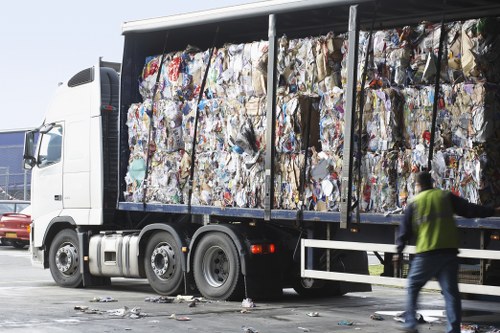 Personal protective equipment (PPE) is provided where risks cannot be adequately controlled by other means. Required PPE may include gloves, high-visibility clothing, safety boots, eye protection and, where relevant, respiratory protection. PPE selection is based on the risk profile of the task and must be worn correctly. Training ensures that staff understand both the limitations and correct use of their equipment.
Training, Competence and Supervision: Adequate instruction and supervision form the backbone of safe clearing operations. Staff engaged in office clearance should receive induction training, task-specific instruction, and refresher briefings. Training records will be maintained and reviewed. Supervisors must ensure that new or temporary team members are monitored until competence is demonstrated, and that safe working practices are consistently applied across the rubbish removal team.
Waste Handling and Segregation Procedures
Procedures for sorting and handling waste are designed to maximise safety and recycling. The following points are mandatory for all operations:
- Conduct a visual assessment before handling items to identify hidden hazards.
- Segregate general office waste, paper, cardboard, IT equipment, and hazardous items for appropriate disposal.
- Use trolleys and mechanical aids for bulky or heavy loads to reduce manual handling risks.
- Ensure sharp objects are contained and labelled before transit.
- Do not mix hazardous materials with general waste streams; report and isolate such items.
Documentation and clear labelling support safe transfer to authorised treatment and disposal facilities and help the clearance operator demonstrate compliance with environmental requirements.
 Incident Reporting and Emergency Procedures: All incidents, near-misses, or hazardous discoveries must be reported immediately to the supervisor. The incident reporting process will be documented and investigated to identify root causes and corrective actions. Emergency procedures include first-aid arrangements, spill containment, and protocols for dealing with suspicious items or hazardous materials discovered during clearance. First-aid kits and spill response equipment must be accessible at worksites.
 Monitoring, Audit and Continuous Improvement: The effectiveness of this policy will be monitored through routine inspections, toolbox talks, and periodic audits. Performance indicators include incident rates, training completion, and audit findings related to rubbish collection standards. Lessons learned will be integrated into revised risk assessments and procedures to drive continuous improvement in safety and reliability.
Legal Compliance and Documentation
While this policy is written to be adaptable across service areas, the contractor will ensure operations comply with applicable waste management and occupational safety requirements. Records such as risk assessments, method statements, training logs, vehicle checks, and waste transfer documentation will be maintained and made available for review. The organisation will cooperate with regulatory inspections and implement corrective actions when required.
Conclusion: This Health and Safety policy establishes clear expectations for safe office clearance and rubbish removal services. By combining robust planning, competent personnel, appropriate equipment, and ongoing review, the aim is to deliver a safe, efficient and responsible clearance service for clients and communities. All staff are expected to support these objectives and to play an active role in maintaining a safe working environment.
