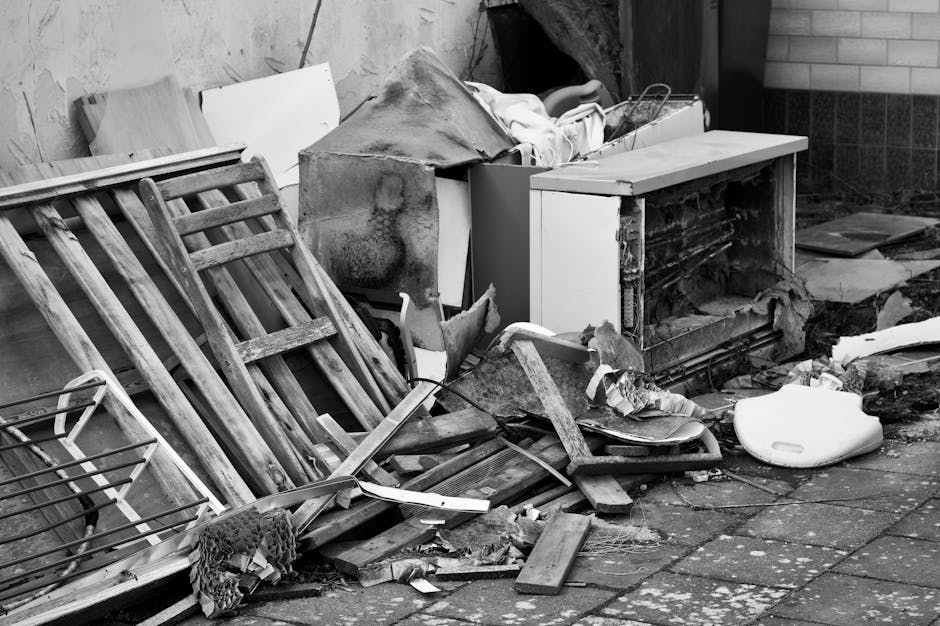
Bulky waste collection Newington Green Stoke Newington made simple

If you have an old sofa blocking the hallway, a mattress that has been leaning against the wall for weeks, or a jumble of broken bits in the garden, you already know how quickly bulky waste becomes one of those jobs you keep walking past. Bulky waste collection Newington Green Stoke Newington made simple is really about taking that headache off your plate and turning a messy, awkward task into something straightforward, safe, and properly handled.
In a busy part of North London, space is tight, parking can be awkward, and nobody wants heavy furniture sitting in a flat staircase or outside the front door any longer than necessary. This guide walks you through what bulky waste collection means, how it works locally, what to watch for, and how to choose the right approach without overcomplicating it. Let's face it, nobody needs another stressful clearance job.
Why Bulky waste collection Newington Green Stoke Newington made simple Matters
Bulky waste is different from your normal day-to-day rubbish. It takes up room, is awkward to move, and often needs more than one person to handle safely. A wardrobe half-dismantled in the landing, a fridge tucked in a corner, or a pile of old office chairs can make a home or workspace feel cramped very quickly. In a dense neighbourhood like Newington Green and Stoke Newington, that matters even more because storage space is at a premium and shared entrances need to stay clear.
There is also the practical side. The longer bulky items sit around, the more likely they are to get damaged, attract dust, or become a trip hazard. You may also find that one bulky item turns into three. Old furniture has a funny way of breeding, almost like socks in the wash. One day it is just a chair; a week later it is the chair, the broken table, and the rug that no longer fits the room.
A simple collection process matters because it reduces friction at every step. You want clear pricing, clear timing, and a team that knows how to remove items without scratching walls, blocking neighbours, or leaving you to figure out the hard bits. That is the real value here: less disruption, fewer surprises, and proper disposal from the start.
Expert summary: A good bulky waste service should make removal feel calm, not chaotic. The best jobs are the ones where the items disappear quickly, the access is managed carefully, and you do not have to spend the rest of the day cleaning up after the collection.
How Bulky waste collection Newington Green Stoke Newington made simple Works
At its core, bulky waste collection is a collection and disposal service for items that are too large, too heavy, or too awkward for standard household waste bins. Think sofas, beds, wardrobes, mattresses, desks, shelving, white goods, garden furniture, and similar large items. Depending on the provider and the type of waste, items may be reused, recycled, or taken for responsible disposal.
The process is usually more straightforward than people expect. In most cases, you share what needs removing, describe access, and arrange a convenient time. Some collections are fixed-price for certain item types, while others are based on load size, weight, access conditions, or the amount of sorting needed. In real life, a first-floor flat with narrow stairs is not the same job as a ground-floor pickup with easy driveway access. Obvious, really, but worth saying because it affects planning.
Here is the simple version of how it usually works:
- You identify the bulky items and decide what stays and what goes.
- You request a quote or collection slot.
- You make sure items are accessible on the day.
- The team removes the waste and loads it safely.
- The items are then sorted for reuse, recycling, or disposal where possible.
Sometimes people ask whether dismantling is necessary. Not always. But taking legs off tables, separating bed frames, or emptying drawers can make the job quicker and easier. Small effort, big difference. If you have ever tried turning a corner with a full wardrobe, you will know exactly why.
If you are comparing related services, it can help to look at broader options too, such as house clearance for whole-property clear-outs or furniture clearance for item-specific removal. For mixed loads, waste removal can be the more flexible route.
Key Benefits and Practical Advantages
The biggest benefit is simple: you get your space back without spending a weekend wrestling with transport, parking, or disposal points. But there are a few other advantages that people often notice only after the job is done.
- Less physical strain: heavy lifting can be risky, especially on stairs or in tight hallways.
- Cleaner living space: bulky clutter makes a room feel smaller and harder to use.
- Faster turnaround: what might take you several trips can often be handled in one visit.
- Better organisation: removing the large items often reveals what can be reused, repaired, or donated.
- Reduced stress: once the awkward stuff is gone, everything else feels easier. Funny how that works.
There is also a sustainability benefit when the provider sorts items carefully. Not every sofa or cabinet is destined for disposal in the same way. Some pieces may be reusable, while others need to be broken down into recyclable materials. A well-run service should consider that before anything heads off-site.
For customers in Newington Green and Stoke Newington, convenience matters just as much as sustainability. A service that arrives on time, communicates clearly, and handles awkward access properly is worth far more than one that simply says it can take "anything." To be fair, that promise can mean very different things in practice.
Who This Is For and When It Makes Sense
Bulky waste collection is not only for big house moves or major renovations. In our experience, it often helps in smaller, everyday situations that build up quietly until they become annoying.
You may need it if you are:
- clearing out a flat before or after moving
- replacing old furniture in a home, studio, or shared property
- emptying a loft, garage, or storage space
- removing garden furniture or broken outdoor items
- dealing with damaged items after water ingress or a sudden household issue
- preparing a rental property for new occupants
- tidying an office, workshop, or small business space
It also makes sense when the items are too awkward for a normal car, too heavy for a single person, or simply too many for you to manage in stages. A broken wardrobe is one thing. A broken wardrobe, a mattress, two office chairs, and an old printer? Now you are looking at a proper job.
If the waste comes from a workplace rather than a home, you may also want to look at office clearance or business waste removal so the collection method matches the setting and the type of waste.
Step-by-Step Guidance
If you want the whole process to feel easy, the trick is to prepare just enough. Not too much, not too little. Here is a practical way to approach it.
1) Make a clear list of what needs to go
Walk through the space slowly. Note each item, and be specific. "Old sofa," "double mattress," and "three broken dining chairs" is far more helpful than "bits of furniture." If there are mixed materials, such as metal frames, wood, and soft furnishings, mention that too.
2) Check access before booking
Think about stairs, parking, gates, lift access, and where the items will be placed for pickup. A collection can be straightforward in theory and awkward in practice if the team cannot get close enough. Narrow front steps and a tight turn in the hallway can change the whole approach.
3) Separate anything that should stay
This sounds obvious, but it is the step people most often rush. Move anything sentimental, valuable, or reusable well away from the bulky waste pile. That avoids mix-ups and makes the loading process quicker. If you are clearing a room under pressure, give yourself a quiet ten minutes and do a final check. Worth it.
4) Ask how the waste will be handled
You do not need to know every detail, but it is sensible to ask whether items will be reused, recycled, or disposed of in line with local expectations. A trustworthy provider should explain the process in plain English and not dodge the question.
5) Prepare the items for easy lifting
If safe to do so, remove loose contents, unplug appliances, and separate dismantled parts. Leave the heavy lifting to trained people. That is the whole point, really.
6) Confirm timing and any final instructions
Check the arrival window and make sure someone will be available if needed. If there are building rules, restricted parking, or neighbour access considerations, flag those in advance. A little communication saves a lot of faff later.
Expert Tips for Better Results
After enough bulky collections, a few patterns start to stand out. These tips are small, but they genuinely help.
First, group similar items together. It makes the loading process smoother and helps the team plan the vehicle space more efficiently. A pile of mixed odds and ends can look harmless, but it often slows everything down.
Second, think in layers. Items at the back of a room are often harder to reach, so place the easiest items nearest the exit if you are sorting things beforehand. That simple shuffle can save a surprising amount of time.
Third, keep wet or contaminated waste separate. If an item has mould, water damage, or sharp broken parts, mention it. That is not being fussy; it is just good practice.
Fourth, ask about matching services. If your bulky waste job is really part of a bigger clear-out, you may get better value from a broader service such as home clearance, flat clearance, or loft clearance.
Fifth, be realistic about time. A one-bedroom flat might only need a short visit, but awkward access or multiple heavy items can extend the job. It is better to plan with a little breathing room than to cram everything into a rushed slot.
And one more thing. If something feels too heavy to shift safely, it probably is. Trust that instinct.
Common Mistakes to Avoid
Most bulky waste problems are not caused by the collection itself. They come from avoidable mistakes before the vehicle even arrives.
- Leaving booking details vague: saying "some old stuff" can lead to the wrong vehicle or the wrong time slot.
- Blocking access: bins, bikes, prams, and stacked bags in hallways make removal slower and less safe.
- Forgetting dismantling needs: large items may need to be broken down to fit through doors or stairwells.
- Mixing unwanted items with keepers: this is how mistakes happen. Always separate clearly.
- Assuming all bulky waste is the same: furniture, appliances, and renovation waste are not identical jobs.
- Ignoring local restrictions: parking, loading, and access matter more in busy streets than people expect.
Another common issue is waiting too long. A room gradually fills, the pile gets more awkward, and the whole thing starts to feel bigger than it really is. If that sounds familiar, you are not alone. Many people put it off because they want to "deal with it properly." Fair enough. But sometimes properly means sooner rather than later.
Tools, Resources and Recommendations
You do not need specialist equipment for every bulky waste job, but a few basics help make the process cleaner and safer.
- Measuring tape: useful for checking whether items will fit through doorways or around corners.
- Strong gloves: especially helpful when moving sharp-edged or dusty items.
- Tape and labels: handy if you are separating keep, donate, and remove piles.
- Basic screwdriver or hex key set: useful if furniture can be safely dismantled beforehand.
- Bin bags or boxes: good for loose contents from drawers, cabinets, or shelving.
For readers comparing clearance options, the following pages may help you choose the right service for the job: garage clearance for storage-heavy spaces, garden clearance for outdoor waste, and builders waste clearance for renovation leftovers.
If cost control is on your mind, it is also sensible to review pricing and quotes before you book. Clear pricing details help you compare like with like, rather than guessing.
Law, Compliance, Standards, or Best Practice
When bulky waste is collected, the key point is that it should be handled responsibly and in line with accepted UK waste practice. That means using a lawful collection route, avoiding fly-tipping, and making sure items are taken to an appropriate facility or treatment route where needed.
For a homeowner or business, the main thing is to use a provider that handles waste correctly and can explain their process sensibly. If a company cannot tell you what happens to the waste, that is a warning sign. You do not need a lecture on regulation, just clear reassurance that the items are being managed properly.
It is also wise to be careful with items that may need special handling, such as electrical appliances, sharp metal pieces, or anything contaminated. In some cases, separate handling is needed. That is normal. A good provider will not overstate what they can do, and a careful customer should not either.
Best practice usually includes:
- clear item descriptions before collection
- safe lifting and loading methods
- appropriate separation of reusable and non-reusable material where possible
- responsible disposal routes
- good communication around access and timing
For additional peace of mind, you can also review supporting company information such as health and safety policy, insurance and safety, and recycling and sustainability. Those pages are useful when you want a clearer picture of how a service operates beyond the collection itself.
Options, Methods, or Comparison Table
There is usually more than one way to deal with bulky waste. The right choice depends on the size of the job, the access, and how quickly you need the space cleared.
| Option | Best for | Pros | Trade-offs |
|---|---|---|---|
| One-off bulky waste collection | A few large items | Simple, quick, minimal disruption | Less flexible for complex mixed loads |
| Full house or flat clearance | Multiple rooms or a property move | Handles larger jobs in one go | May be more than you need for a small load |
| Furniture-only removal | Sofas, beds, tables, wardrobes | Good fit for common household items | Not ideal if waste is mixed |
| Garden or garage clearance | Outdoor clutter and storage overflow | Useful for bulky, weathered items | May need sorting before collection |
| Office clearance | Desks, chairs, cabinets, business items | Suited to workplace waste streams | Requires clearer planning and access control |
There is no single "best" option for everyone. A small flat with one sofa and a mattress should not be treated like a full property clearance, and a business moving out of an office should not be treated like a simple furniture pickup. Matching the service to the real job saves time, money, and frustration.
Case Study or Real-World Example
Picture a typical Stoke Newington flat on a damp Tuesday morning. The hall is narrow, there is a bulky sofa leaning near the front room, a mattress in the spare bedroom, and an old chest of drawers that has seen better days. The resident had put off the job for weeks because the stairs were tight and the parking looked awkward. Fair enough. It had become one of those "I will sort it at the weekend" jobs.
Instead of trying to move everything at once, the resident listed the items, checked access, and grouped the pieces by size. The sofa was measured, the drawers were emptied, and the mattress was moved near the front room door. On collection day, the team could get straight to work without spending ages rearranging the flat. The whole job felt calmer because the planning had been done early.
What made it succeed was not a complicated process. It was clarity. The items were identified properly, the access was explained, and the service matched the actual need. No drama, no guessing, no last-minute scramble while the kettle boiled in the background.
That is the pattern you want to repeat. Clear list, clear access, clear removal. Simple really.
Practical Checklist
Use this checklist before your bulky waste collection so the day runs smoothly.
- Identify every item that needs removing
- Separate keep, donate, and remove piles
- Check whether anything needs dismantling
- Measure large furniture and key access points
- Confirm stairs, lifts, gates, and parking details
- Remove personal items from drawers, shelves, and cupboards
- Flag any heavy, sharp, damp, or unusual items
- Make sure the collection area is easy to reach
- Review pricing, timing, and service scope
- Keep pathways clear on the day
Quick reminder: if you are also clearing other rooms, it may be more efficient to combine the job into a broader service such as furniture disposal or garage clearance. That can cut down on repeat visits and extra hassle.
Conclusion
Bulky waste collection Newington Green Stoke Newington made simple is really about reducing friction. When the job is planned properly, even awkward items like sofas, wardrobes, mattresses, and mixed household clutter can be removed without turning the day upside down. You get space back, the property feels lighter, and the whole process stops hanging over you.
The best outcome is usually the least dramatic one: clear access, clear communication, sensible handling, and proper disposal. Nothing flashy. Just a job done well, which is honestly what most people want in the first place.
If you are weighing up options, start by identifying what needs to go, how quickly you need it gone, and whether the job is a simple pickup or part of a wider clearance. A good plan saves money and stress, and it tends to make the final result feel much more satisfying. One less thing on the list. That matters.
Get a free quote today and see how much you can save.
Frequently Asked Questions
What counts as bulky waste in Newington Green and Stoke Newington?
Bulky waste usually means large household or business items that do not fit in regular bins, such as sofas, beds, wardrobes, tables, mattresses, and similar awkward items. In some cases, appliances or mixed clear-out waste may also count, depending on the service.
Is bulky waste collection better than hiring a skip?
It depends on the job. Bulky waste collection is often better for one-off large items and situations where you want a fast, direct removal. A skip can make sense for ongoing renovation waste, but it may need more space and planning.
Can I book bulky waste collection for just one item?
Yes, many people do. One sofa, one mattress, or one wardrobe is a very common request. If access is straightforward, a single-item collection can be a neat, efficient solution.
Do I need to dismantle furniture before collection?
Not always, but it often helps. Taking legs off tables, separating bed frames, or removing loose parts can make the collection faster and safer. If you are unsure, ask before the day arrives.
How should I prepare for a bulky waste pickup?
Make a clear list of items, check access, empty drawers or cupboards, and keep the path to the collection point clear. If you are in a flat, think about stairs, lifts, and parking too.
What happens to the items after collection?
That depends on the item and the provider's process. Items may be reused, recycled, or disposed of responsibly. A good service should be able to explain the general route without giving you vague answers.
Can bulky waste include office furniture?
Yes, but it is often better handled through an office clearance or business waste removal service, especially if there are desks, filing cabinets, monitors, or mixed workplace items.
How do I know if my items are suitable for collection?
If the items are too big, too heavy, or too awkward for normal household waste collection, they are probably suitable. If you have specialist materials, damaged appliances, or unusual waste, it is wise to mention them when booking.
Is bulky waste collection suitable for flats and upper floors?
Yes, though access details matter a lot. Narrow staircases, shared entrances, and limited parking can affect the process, so it helps to explain the layout clearly when arranging the collection.
Can I include garden waste with bulky items?
Sometimes, but not always in the same load. Garden waste clearance can be a separate service, especially if the material is mostly green waste, broken outdoor furniture, or mixed garden debris.
How do I avoid extra costs?
Give accurate item details, describe access clearly, and separate unwanted items before collection. Surprises on the day usually create delays, and delays are where costs and hassle tend to creep in.
What should I do if I am clearing out a whole property?
For a full clear-out, look at house clearance or flat clearance rather than a basic bulky waste pickup. That gives you a service better suited to larger volumes and mixed contents.
Is it worth checking company policies before I book?
Yes, especially for health and safety, insurance, recycling, and pricing. Those details help you judge whether the service is well run and whether it fits what you need.